




Fabric vs Genuine Leather Recliner: Cost, Durability and Market Fit
Quick answer. Fabric and leather recliners are usually built on the same frame, the same mechanism and the same foam — the cover is the only part that changes, and it changes three things: what the unit costs to make, how it fails in a living room, and which channel you can sell it into. Fabric is the volume choice: lower entry cost, more colours, replaceable panels, and it can carry flame-retardant finishing. Genuine leather is the margin choice: it holds its shape, wipes clean, and reads premium on a showroom floor. Decide by channel first, then by climate.
What actually changes when you swap fabric for leather?
Almost nothing under the cover. Both versions are built on a high-strength wooden frame or a metal frame with S-shaped spring packs and layered filling — foam, feather, cotton — cut to ergonomic patterns. Foam is D28, D30 or D35, all virgin foam with no powder filler. Standard recliners are designed around a 120–150 kg user. The mechanism, the recline geometry and the load path do not care what the outside is wrapped in.
The cover changes everything else. Fabric arrives as roll goods: you cut by length, and the only constraint is width utilisation plus pattern repeat. Leather arrives as a hide — a single irregular shape whose usable area is limited by scars, stretch marks, belly and neck. That difference drives panel layout, sewing time, matching effort, carton weight and the repair story three years later.
Where does the cost gap actually come from?
The gap comes from four places, and only the first is obvious.
- Cutting yield. A hide is not a rectangle. How much of it reaches the sofa depends on nesting panels around the defects, and a three-seater with wide outside arms wastes more than a single chair.
- Panel matching. Every panel on one set should come from the same dye lot and read the same grain. That is a cutting-room discipline paid for in labour, not material.
- Additional operations. Skiving, edge folding and heavier thread work add machine time. Fabric needs its own extra step instead — backing or a flame-retardant finish — which is a process cost.
- Freight and after-sales. A leather set is heavier per seat, so payload per container drops; and a leather panel replaced two years later will not match sun-faded panels around it.
That pattern is industry-typical; both covers here are quoted off the same frame, so you compare cover economics, not two builds.
Which one actually lasts longer?
"Durability" is not one number: the two materials fail differently.
Fabric fails visibly. Abrasion rubs the surface, pills form where arms and backs take friction, and sunlight fades the panels facing the window. The test that speaks to this is the Martindale method (ISO 12947-2): a standard abradant rubs the fabric under fixed load until the yarn breaks down. We run Martindale testing on upholstery fabric within a programme of more than 150 durability test procedures.
Leather fails gradually. The hide is strong; the weak points are the finish, the flex line where seat meets back, and the seams. Coating adhesion and repeated flexing show up first as fine cracking, then as colour loss along the crease. A cheap coated split therefore looks excellent for eighteen months, then ages faster than good fabric.
Structure is separate. Incoming, in-line and pre-shipment inspections run with dedicated QC; wood moisture is held at 8–12%; metal frames go through salt-spray testing; seam pitch is checked with a caliper. Warranty reflects that split: two years on the complete unit, five on the wooden frame, lifetime on the metal frame. The cover is a wear item either way.
Which market should get which cover?
Start from the use case, not the country.
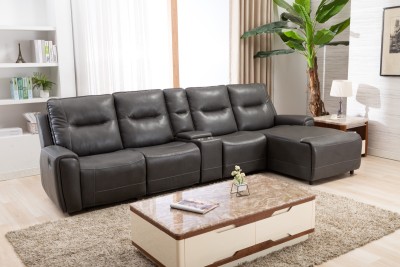
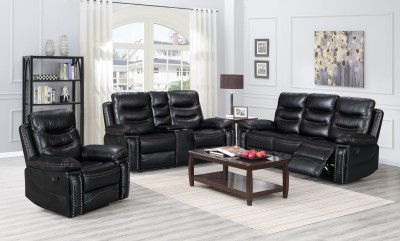
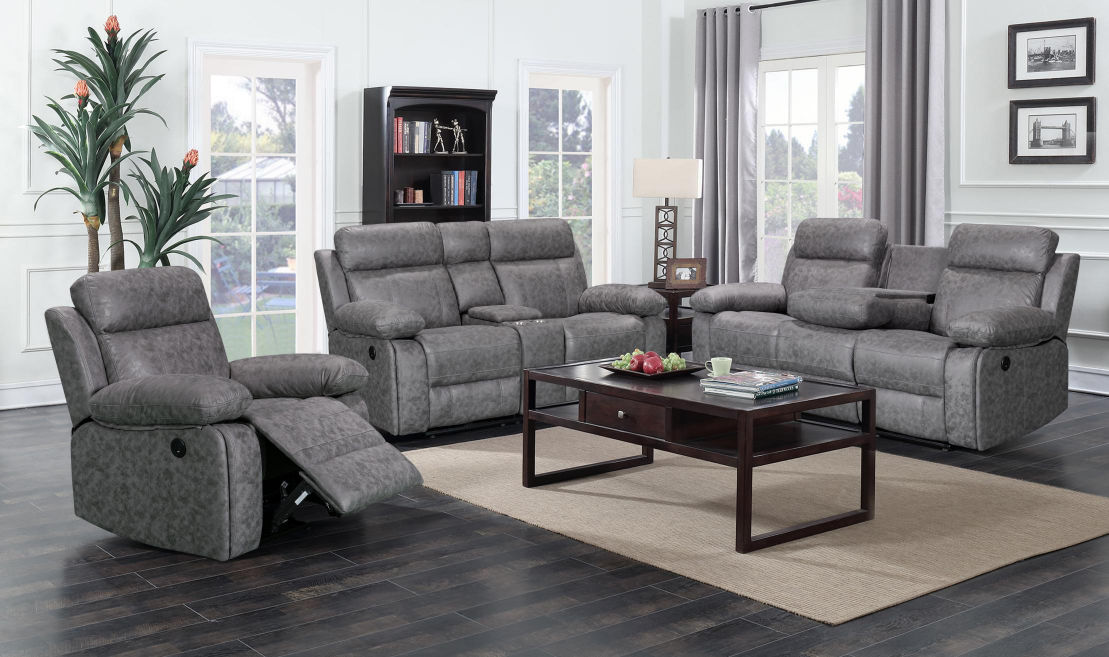
- Volume retail and rental apartments. Fabric, specifically tech fabric — it reads close to leather at a fabric cost. The 8307 manual recliner sofa set is the pattern: grey tech fabric, 1+2+3 with console and cup holders.
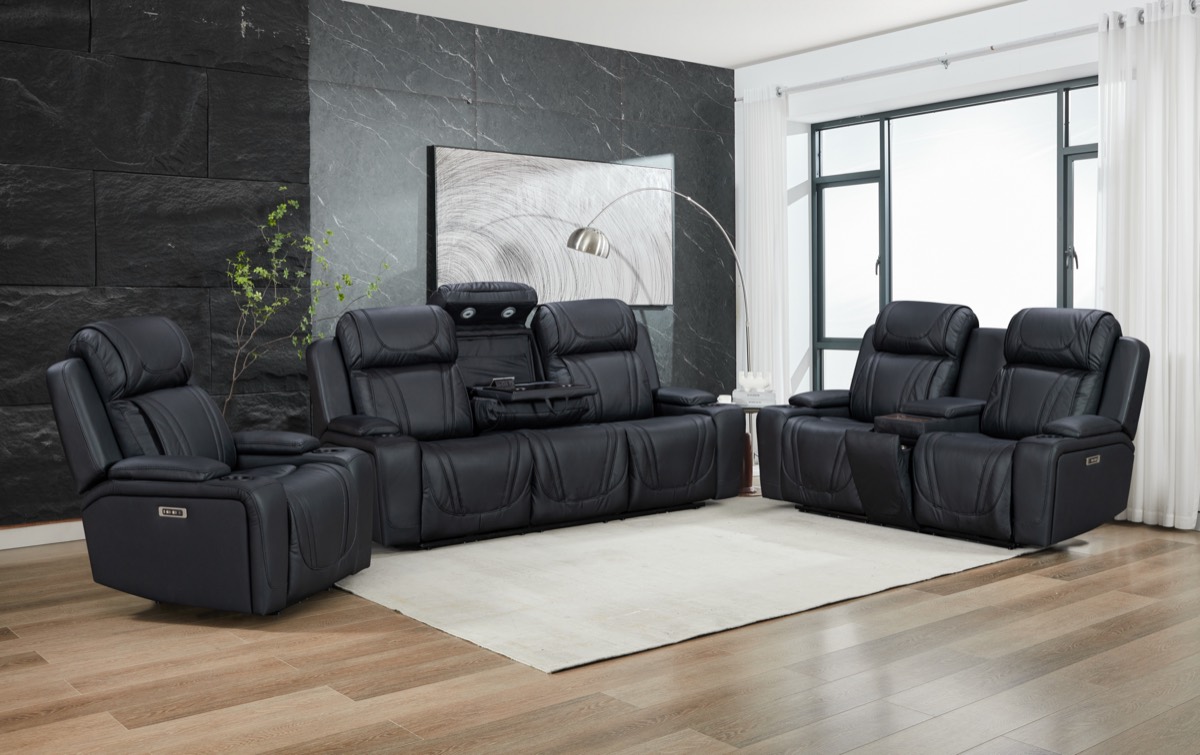
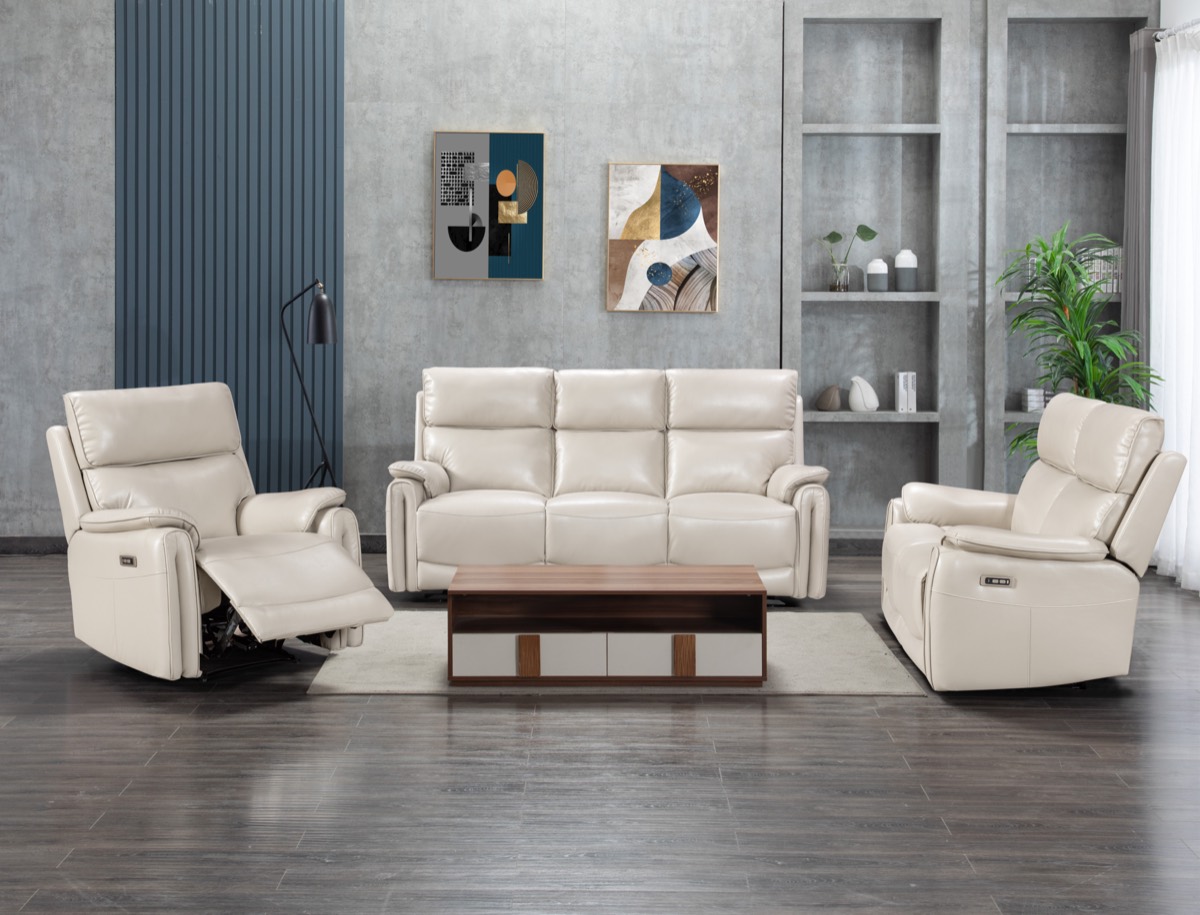
- Premium showroom and hotel projects. Genuine leather, because the first thirty seconds on a showroom floor are a touch test. The 8485 genuine leather power recliner sofa is built for that channel.
- Small apartments and warm, air-conditioned climates. Leather, preferably a breathable construction, so the seat does not turn sticky in summer. The 8424 real leather recliner sofa is sized for apartment living.
- Families with pets, and care channels. Fabric with a water-repellent finish, and removable covers where the model allows. Claws mark leather permanently; a fabric panel can be replaced.
We ship to more than 100 countries, with North America, Europe, the Middle East and Australia as the main markets, so one model often needs two covers for two channels. Decide that at sampling.
How do certification requirements narrow the choice?
Fire performance eliminates options fastest. For US bulk orders, production quality meets California TB 117-2013. For the UK, requirements follow BS5852, and fabric can be run through British-standard flame testing. For EU buyers the layer is chemical: REACH and RoHS compliance, with OEKO-TEX in our supplier admission standard and third-party reports from laboratories such as SGS and Bureau Veritas. Motors and frames are admitted with CE, UL, BSCI or SGS audit reports; the wooden frame uses FSC-certified timber.
What does the cover choice do to MOQ and lead time?
Minimum order is one 40HQ container, one model and two colours — the default recommended quantity. Sampling takes 15–25 days after details are confirmed; bulk production runs about 30–45 days depending on quantity and season, with 25 days possible on an expedited basis.
The cover decision belongs inside that window. Switching cover after sampling means new panel patterns, a new cutting trial and a new sample approval, because the two are cut to different rules. Deciding early costs nothing extra; deciding late costs a sampling cycle.
Which PandaSofa models fit?
People also ask
- What customization options do you offer for materials and colors? — the full cover list, including top-grain leather, faux leather, fabric, suede, water-repellent fabric, PU and EPU, plus colour options.
- How should end users care for and clean their recliner sofas? — what to tell the customer at handover so a fabric set does not come back as a claim.
- What certifications and tests can your products meet? — the test and compliance position behind both covers.